


How leaders can rise to the challenge of COVID-19
Crisis-management essentials for coping with emergencies
SECTIONS STRATEGY COLLECTIONS COVID-19 CRISIS
As cases of COVID-19 continue to grow across the world, leaders in business, government, and other spheres face unprecedented challenges. The disease has encroached not only on public health but on global economic well-being and on some of the most fundamental practices of modern society. It has generated great anxiety and exacted an enormous and growing human toll. And it has required virtually every organization to reinvent its processes to cope with a world in which many people simply don’t feel safe being in the same room together.
Crisis situations can overwhelm even the most experienced leaders, presenting unexpected, complex scenarios that evolve at a fast pace and in several directions. Even in cases in which contingency plans have been prepared, those plans need to be adjusted to respond to rapidly changing circumstances. Fortunately, there are tools and perspectives leaders can use to help their organizations weather difficult times. By building trust, managing fear, and encouraging a sense of duty and community orientation, any leader—whether in business, government, or the nonprofit sector, and in organizations big and small—can better navigate the difficult path of crisis management.
Building trust
Crises frequently happen without warning and require a response under extreme time pressure. Decision makers often find themselves drowning in data, yet truly vital information is not available. During these situations, leaders must continue to build trust, both internally and externally. Doing so generates much-needed room to maneuver and the goodwill that leaders will need to rely on when tough decisions have to be made.
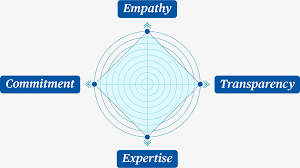
Even though the desirability of trust is obvious, leaders often struggle with building and maintaining it, especially during high-stakes crises. Research has identified four major factors that influence the level of trust among stakeholders involved in a crisis, summarized in what I’ve called the Trust Radar:
Transparency
Full transparency is reached when, in the mind of your audience, all relevant questions have been addressed. Your audience—not you—will determine what information is considered relevant. What is relevant will also vary for different audiences. What transparency means to an investor may not be the same for a customer. What is important to a faculty member may be irrelevant to the parent of a student. It is essential to understand what is in the heads of your respective constituencies and address those things in a language and style that resonates with them.
Transparency is not the same as full disclosure, and transparency may be reached without full disclosure. This will be the case if the leader conveys a rationale for limiting disclosure that reflects concerns shared by the relevant audience. For example, in the case of a health crisis, privacy concerns may limit what can be disclosed (e.g., not revealing the identity of an individual who has tested positive for COVID-19). Rather than simply declining to comment, leaders can emphasize the importance of patient privacy, a concern shared by the audience, as a clear and understandable reason for limiting disclosure. In other cases, relevant information may not yet be available (e.g., the number of people who may have had direct contact with an infected person or the likely infection rates). As a general rule, the rationale for limiting disclosure must pass the “reasonable person test,” meaning that it will seem justifiable to most people.
Transparency is not the same as full disclosure, and transparency may be reached without full disclosure.
It is also possible that transparency will not be achieved despite full disclosure. That will be the case when the leader, in the attempt to fully disclose an issue, fails to be understood. Technical mumbo jumbo, a complex explanation, or legalese—even if it involves disclosing relevant information—will not be considered transparent by the general public. Rather, an audience will assume that a leader or her organization is hiding behind incomprehensible jargon rather than speaking plainly and in a straightforward manner. This is a common trap for leaders who have highly specialized knowledge, including physicians. It is important to remember that what is obvious to you may not be obvious to your audience.
Further, trying to give the impression of full transparency while hiding salient facts can lead audiences to doubt the veracity of what they are being told. There may be times when leadership does not want to release known information. If this is the case, it is important to anticipate the reaction of stakeholders if the information is brought to light through other means. Will the rationale for not disclosing the information pass the reasonable person test? Most often, it is better to release bad information all at once rather than withhold information that will continue to trickle out over time, as an ongoing stream of bad news will undermine trust and raise additional questions about when the company knew of the new information.
A perceived lack of expertise can undermine trust quickly. This is particularly important during health crises and natural disasters. The reputational catastrophe suffered by the US Federal Emergency Management Agency because of their bungled response during Hurricane Katrina in 2005 was not driven by the belief that FEMA had bad intentions, but that it was incompetent.
Research by Stanford’s Jennifer Aaker, University of Minnesota’s Kathleen D. Vohs, and University of Pennsylvania’s Cassie Mogilner has found that in the United States, companies are usually viewed as competent, which is not generally true in other countries. On balance, this is a benefit to a company. The US public usually does not doubt corporate ability, but it often does doubt corporate willingness to do the right thing. That said, for companies, the expectation of competence often has a threshold structure: companies get little credit for exceeding expectations, but are heavily criticized if they fail to meet them. This is particularly problematic when the public has unrealistic expectations of what companies can do.
In contrast, nonprofits are usually viewed as less competent than profit-making companies, but more caring. This means that their audiences may be more forgiving when things do not work out as planned. However, this goodwill does not apply to problems within a nonprofit’s core competency. The Red Cross likely will be forgiven for a cybersecurity breach, but not for a contamination of its blood supply. Moreover, given their reputation for warmth and caring, nonprofits will experience a serious backlash if their actions are viewed as self-serving or financially motivated.

You may also like


4 Simple Ways Good Leaders Become Great!

What makes a great leader?
